Scenario-Based Future Thinking: An Interview with EDMEDIA 2026 Keynote Speaker Alexander Fink
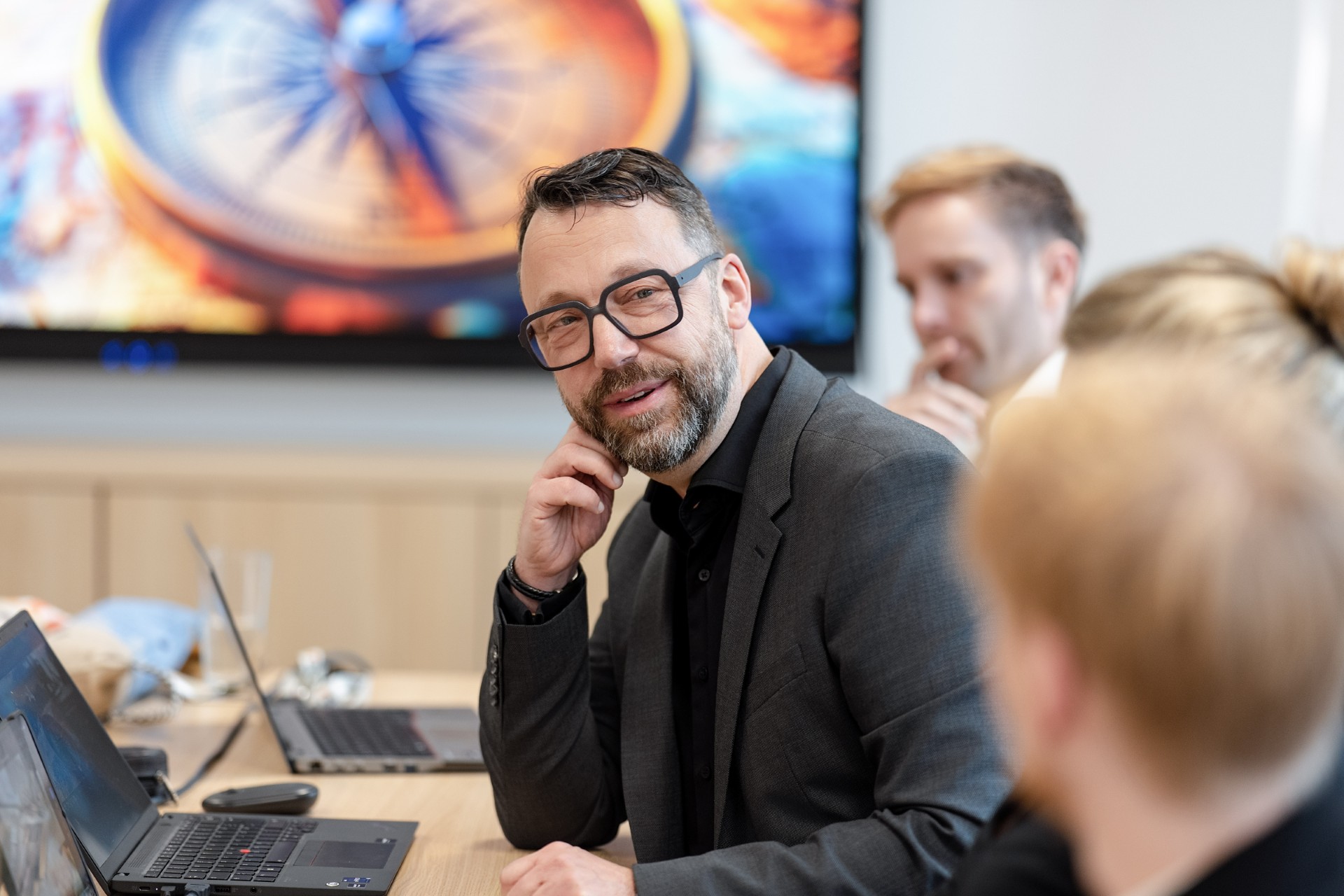
Alexander Fink: Future Thinking Expert and CEO of ScMI Scenario Management International
As higher education faces growing uncertainty, scenario planning offers a way to think more deliberately about the future rather than simply reacting to change as it comes. At EDMEDIA 2026, Alexander Fink, founder and CEO of ScMI Scenario Management International, will bring that perspective to his keynote, “Strategic Decisions in Uncertain Environments – Scenarios for the Future of Higher Education.” Drawing on his extensive work in foresight and scenario development across countries, industries, and sectors, Fink invites educators and institutional leaders to consider how higher education can make better strategic decisions in settings shaped by volatility, uncertainty, complexity, and ambiguity (VUCA).
Ahead of the conference, we talked about uncertainty, foresight, and what scenario thinking can offer the future of higher education.
Can you explain what a futurist does, and what methodologies you deploy in your work?
All of us – whether in business, at universities, or in our personal lives – make decisions with a certain perspective on the future. In most cases, we base these decisions on the past (that is, our experiences). But that no longer works when the world around us is changing. That’s when we need different tools – trends, or in times of increasing uncertainty, various scenarios. Futurists help identify trends, develop scenarios – and ultimately, make better decisions based on them.
What first brought you to education, and what specifically fascinates you about future thinking as a field?
I studied economics and mechanical engineering and wrote my thesis on scenario planning while there. The scenario management approach emerged during my subsequent doctoral studies. In 1998, we founded ScMI, and since then we have been supporting companies, associations, and public institutions in developing, evaluating, and applying scenarios. We were able to anticipate numerous so-called “black swans” – such as the global financial crisis, Dieselgate, and the military conflict in Europe – at an early stage through scenario planning. And after nearly 30 years, I can say: It simply never gets boring. The future constantly reinvents itself; there are always exciting new topics.
Your recent work engages closely with higher education futures and the impacts of (generative) artificial intelligence. How is AI currently changing the kinds of futures we are able to imagine for education, both positively and negatively?
One can consider the role of AI in higher education futures from two perspectives. In terms of content, AI is already transforming many processes at universities today and has the potential to change even foundations long considered immutable. This becomes very clear in the scenarios I will be presenting at EDMEDIA 2026. For students, AI can offer significant benefits by opening up access to knowledge. For smaller cities, it can be advantageous if major university hubs lose their prominence. However, we are also aware of the pitfalls associated with AI—for example, when we can no longer trace the origin of knowledge or when we lose the ability to interpret information independently. Methodologically, AI is of course also changing the way we think about the future. Here at ScMI, we are currently leading a research project in which we are examining the potential and possibilities in greater detail.
Many colleges and universities are currently responding to rapid changes in technology, demographics, and learner expectations. When you think about the future of higher education, what are some of the key uncertainties institutions should be paying closest attention to right now?
In our scenario project on the future of higher education, which we conducted in collaboration with the BLB NRW – the building and property management agency responsible for universities in North Rhine-Westphalia – we were able to identify several such uncertainties: the role of academic education, the impact of universities on cities and society, the curricula of universitites, the significance of technology and AI, the attractiveness of a location for education and research, the relationship between public and private actors – and, of course, university funding. This brief list alone makes it clear that higher education is a highly complex field.
For attendees coming to EDMEDIA 2026, what kinds of conversations do you hope your keynote will spark about the future of higher education?
I’m not so much concerned with individual topics or scenarios. It’s important to recognize that there is no longer “one future,” but rather that universities, too, must cope with various scenarios. However, I will also show that this can be done in a very targeted way. Ultimately, it’s not about having a separate strategy for every scenario, but about finding ONE strategy that allows you to position yourself robustly for the years ahead.
About
 Alexander Fink is a futurist, founder and CEO of ScMI Scenario Management International. He holds a degree in industrial engineering from Paderborn University and completed his doctorate at the Heinz Nixdorf Institute on scenario-based corporate management. He has led scenario and foresight processes in more than 20 countries and numerous industries and subject areas. He is the author of several books, including “Scenario-Management and Strategic Foresight” (appears 2026), the “Handbook of Innovative Economic Development” (2021) and “Rethinking Germany” (2018). He teaches scenario planning, foresight, and strategic management at various universities and is chairman of the non-profit association “D2030 – Rethinking Germany”.
