Fall 2026
Online
eLearn Keynote & Invited Speakers
Keynote & Invited Speakers
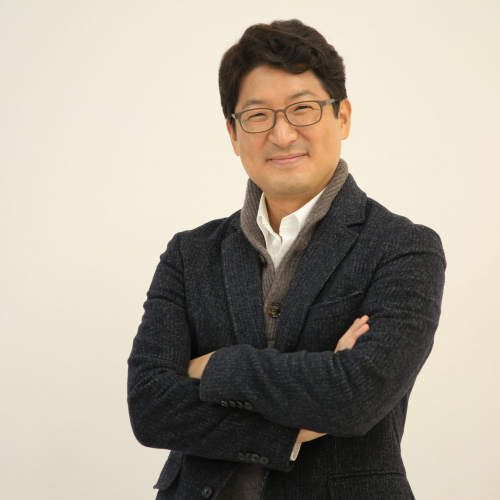
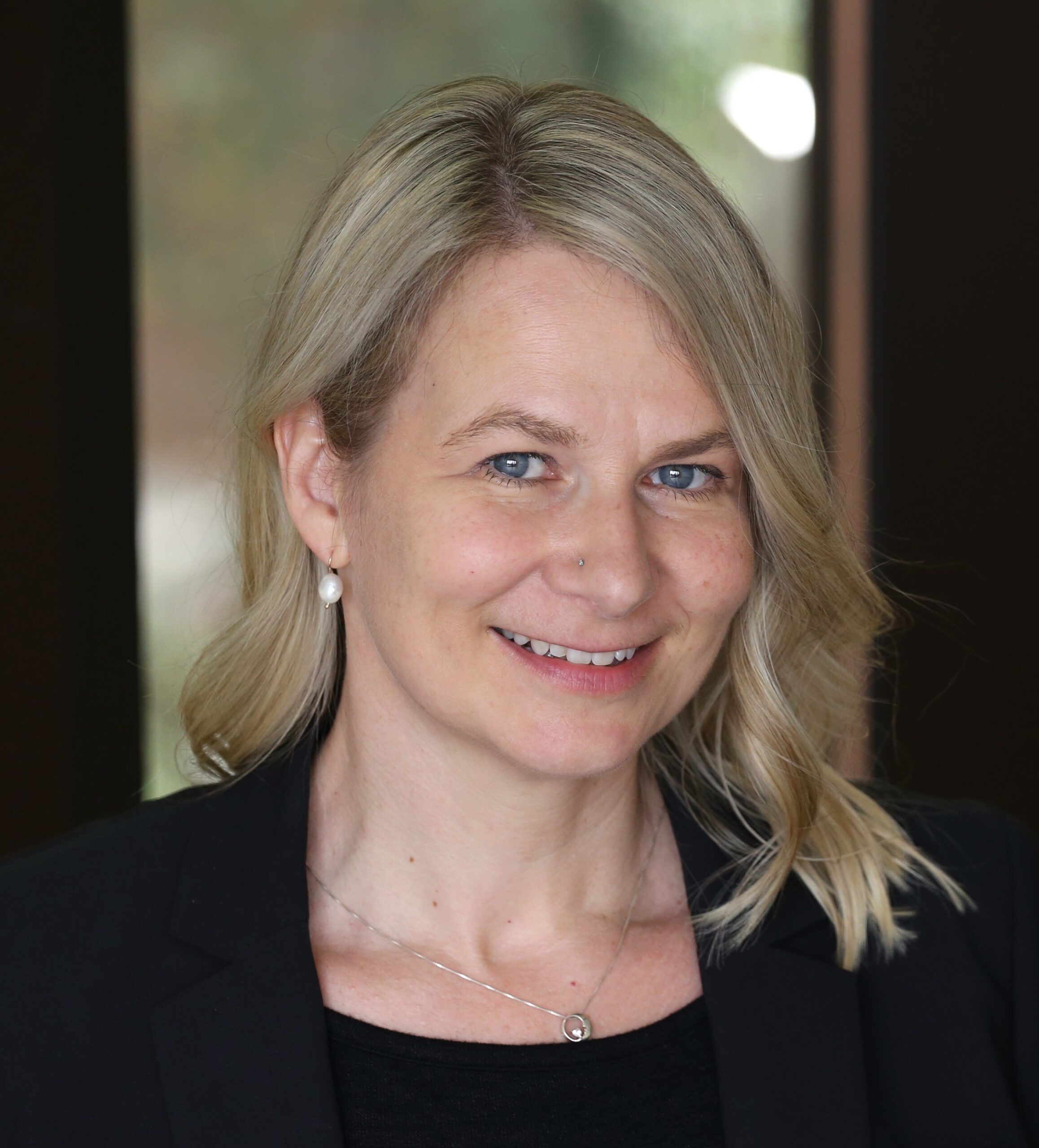

Tuesday, October 14
Empowering Lifelong Learners by Leveraging Networked Knowledge Activities in the Online Classroom
Vanessa Dennen, Florida State University

Abstract: Lifelong learning opportunities are available to everyone with an Internet connection. This learning may occur through open learning experiences and learning through personal learning networks, which connect people and knowledge in online spaces. Underlying these self-directed learning experiences are networked knowledge activities, which support various knowledge interactions. This keynote highlights the unique opportunities available to online educators to help students develop awareness, experiences, connections, and skills that support their endeavors as lifelong learners for personal and professional development purposes. The Networked Knowledge Activities framework will be shared as a structure that promotes the identification and development of these critical skills, which in turn fosters a culture of continuous learning and growth in online environments.
Bio: Vanessa Dennen is the Tyner Distinguished Professor of Education at Florida State University, where she teaches courses on online pedagogy, instructional design for new and emerging technologies, and qualitative and mixed research methods. Known for her “People First, Content Second, Technology Third” humanist approach to online teaching, she is committed to using open educational resources and open pedagogy and developing lifelong learning skills.
Vanessa’s research focuses on pedagogical, social, and ethical aspects of learning and interacting in online environments. She began her academic career studying student discussion and engagement in online classes. She now focuses more broadly on networked knowledge activities in professional development settings, integrating emerging online technologies in formal and informal learning contexts, and the development of identity and community in online environments.
As a practitioner, she has served as an instructional designer and evaluator for online learning programs in corporate, government, and higher education settings. Vanessa is also a trained leadership and performance coach, working with academic clients and institutions to promote personal growth and professional development and help people reach their individual and organizational goals.
Wednesday, October 15
The Inevitable AI Coach: Uniting Global Initiatives in AI Empowerment for Educational Entrepreneurship
Paul Kim, Founder, Seeds of Empowerment

Abstract: In a world transformed by AI, this keynote unveils a framework that brings together Kazakhstan’s AI and Entrepreneurship Initiative, Korea’s AI Coach program, and a global K-12 AI Competency Development curriculum. At its core is meta AI competency—the ability to creatively and efficiently harness diverse AI tools to solve complex problems. By integrating the 6Cs (collaboration, communication, critical thinking, creativity, compassion, and commitment) into educational curricula, we empower students to address grand challenges, including the UN’s SDGs. Real-world success stories—from classrooms to professional environments—demonstrate how education, entrepreneurship, and sustainable development converge in our AI-driven future.
Bio: Paul Kim is the Founder and President of Seeds of Empowerment, a global social innovation incubator he established in collaboration with Stanford University graduate students in 2004. Currently, he serves as the Chair of the International Expert Committee on Education Technology at the World Bank and advises Lumos Capital, Roble Ventures, and Chegg, Inc.
As the former Associate Dean and Chief Technology Officer of Stanford University’s Graduate School of Education, Dr. Kim dedicated 24 years to advancing learning technology for marginalized communities worldwide. He also launched the Entrepreneur in Residence (EIR) Program and developed a learning innovation design challenge, serving as an edtech startup incubator for Stanford students.
Dr. Kim now focuses on global learning technology and entrepreneurship initiatives in the Eurasian region, including designing advanced learning labs in Beijing centered on smart farming, VR/AI, biotech, and aerospace mobility. He also spearheads a youth entrepreneurship & AI education program with Kazakhstan’s Ministry of Science. In addition, he launched an AI-powered student learning journey planner for the Metro School District of Incheon, Korea.
Thursday, October 16
Personalized Learning with Generative AI
Jan Plass, New York University
Abstract: Personalized learning is often described as the game changer of learning, and recent developments in generative AI have resulted in the availability of many tools that aim to personalize learning. This talk will present a taxonomy of adaptivity that shows that most current systems are only using a small number of possible variables to personalize. It will discuss cognitive, affective, motivational, and socio-cultural variables future adaptive systems should incorporate to truly personalize learning, and to what extent generative AI can support personalization beyond chat agents.
Bio: Dr. Jan L. Plass, Paulette Goddard Chair in Digital Media and Learning Sciences and Professor at New York University, is the founding director of the CREATE Consortium for Research and Evaluation of Advanced Technology in Education and co-director of the Games for Learning Institute. Dr. Plass draws from a broad range of fields, including cognitive science, learning sciences, computer science, and design, to conceptualize, implement, and study new and more effective ways of learning with digital technologies, especially for underserved communities. His research group is investigating cognitive, social, and emotional design patterns for the design of effective simulations, games, augmented reality, virtual reality, and mixed reality tools for learning a wide range of topics for learners of all ages. This work has been funded by over 30 research and development grants from national and international federal agencies and private foundations. For one of his projects, Project Hope, he led a team to design, implement, and evaluate a digital curriculum for Syrian refugee children in Turkey and in Jordan. He is the author of over 120 journal articles, chapters, and conference proceedings, has given more than 200 presentations, and is the lead editor of Cognitive Load Theory (Cambridge University Press, 2011) and of the Handbook of Game-based Learning (MIT Press, 2020). Dr. Plass is a frequent national and international keynote speaker and advisor, helping companies enhance the impact of their products by applying cognitive science and learning sciences principles. Dr. Plass received his MA in Mathematics and Physics Education and his Ph.D. in Educational Technologies from Erfurt University (PH Erfurt, Germany).
Fireside Chat:
Monday, October 13, 3:00pm
Welcome to the pitch: Getting Published in High Impact OFDL Journals
Som Naidu, TED Associates; Vanessa Dennen, Florida State University; Cher Ping Lim, The Education University of Hong Kong with Moderator: Curtis J. Bonk, Indiana University
Abstract: Welcome to the pitch! Participants in this session will be asked to offer impromptu responses to a selection of proposals for research and publication aligned with the Conference themes (some of these will be invited and others can emerge from the floor). A group of expert panelists (from among experienced Editors and members of Editorial Boards of peer-reviewed journals attending the conference will help moderate this session. The idea is to demonstrate to participants how the peer-review process works and what goes into moving a piece of research from its design, development and implementation to its eventual publication. Participants will walk away from this session with greater awareness and improved understanding of the workings of the peer-review process and how best to navigate it.
Invited Symposium
Tuesday, October 14, 1:45pm
Empowering Teachers Initiative: ICT-Mediated Teacher Professional Development at Scale
Cher Ping Lim, The Education University of Hong Kong; John Arnold Siena, SEAMEO Secretariat; Juliana, Putera Sampoena Foundation; Lee Jo Ann, Evolution Malaysia
Bios:
Cher Ping is a Chair Professor of Learning Technologies and Innovation, and the Co-Director of the Global Institute for Emerging Technologies at The Education University of Hong Kong. Over the last two decades, he has engaged major education stakeholders at the national and international levels as his research and development partners for enhancing equity, quality and efficiency in the education sector enabled by emerging technologies.
Dr. Siena is the Deputy Director of SEAMEO Secretariat since early 2023. He is experienced in the field of education starting as a classroom teacher for more than a decade teaching English and Journalism subjects in high school and some professional subjects in the graduate level. He later held executive positions in the Department of Education in the Philippines culminating in his appointment as Director IV for teacher professional development.
Juliana is the Head of Development & Program of Putera Sampoerna Foundation-School Development Outreach. Prior to that, she served as a teacher and Head of Curriculum in some schools in Indonesia for 10 years. She engaged with hundreds of teachers and schools in outreach areas, providing consultancy and workshops at all levels of education and in the community, including local governments, for improved learning for all students. She has led the development of three flagship programs: Lighthouse School Program, Teacher Learning Centre, and Guru Binar (teachers professional development platform).
Lee Jo Ann has over 10 years of experience in education, with expertise in curriculum, coaching, and impact measurement. As Edvolution’s Programme and Impact Monitoring Manager, she leads a national initiative to build teacher capacity and improve literacy, while also overseeing research with TPD@Scale and programme evaluation across schools and districts.
Fireside Chat:
Wednesday, October 14, 3:00pm
Policy Development for Open, Flexible and Distance Learning
Som Naidu, TED Associates; Theo Bastiaens, Open University Netherlands; Kumiko Aoki, Open University of Japan; Tian Belawati, Indonesia Open University
Abstract: The COVID-19 pandemic forced educational institutions globally to engage with open, flexible and distance learning methods in order to remain viable and operational. Much of this however, has been hasty and without the development or realignment of strategic plans and policies. Many argued that there was no time to engage in any such planning, while many did not know how and where to begin with this kind of re-imagination and re-engineering of core business models.
This workshop proposal seeks to address that deficit, and as such it is especially suited for those who are embarking on, or already engaged with such policy development in relation to a reimagination of their core business models. Participants in this workshop will engage with how to begin engaging with policy development for open, flexible and distance learning—for now, and in the future. This will involve foremost, exploring the key dimensions of open, flexible and distance learning, namely: 1) Open access which is about inclusive, equal and flexible access to educational opportunities without barriers such as entry qualifications and ability to pay; 2) Open learning which is about the ability of students to be able to study and learn at any time, from anywhere and at any pace; and 3) Open scholarship which is about the release of educational resources under an open license that permits no-cost access, use, adaptation, repurposing and redistribution by others.